





Key Takeaways
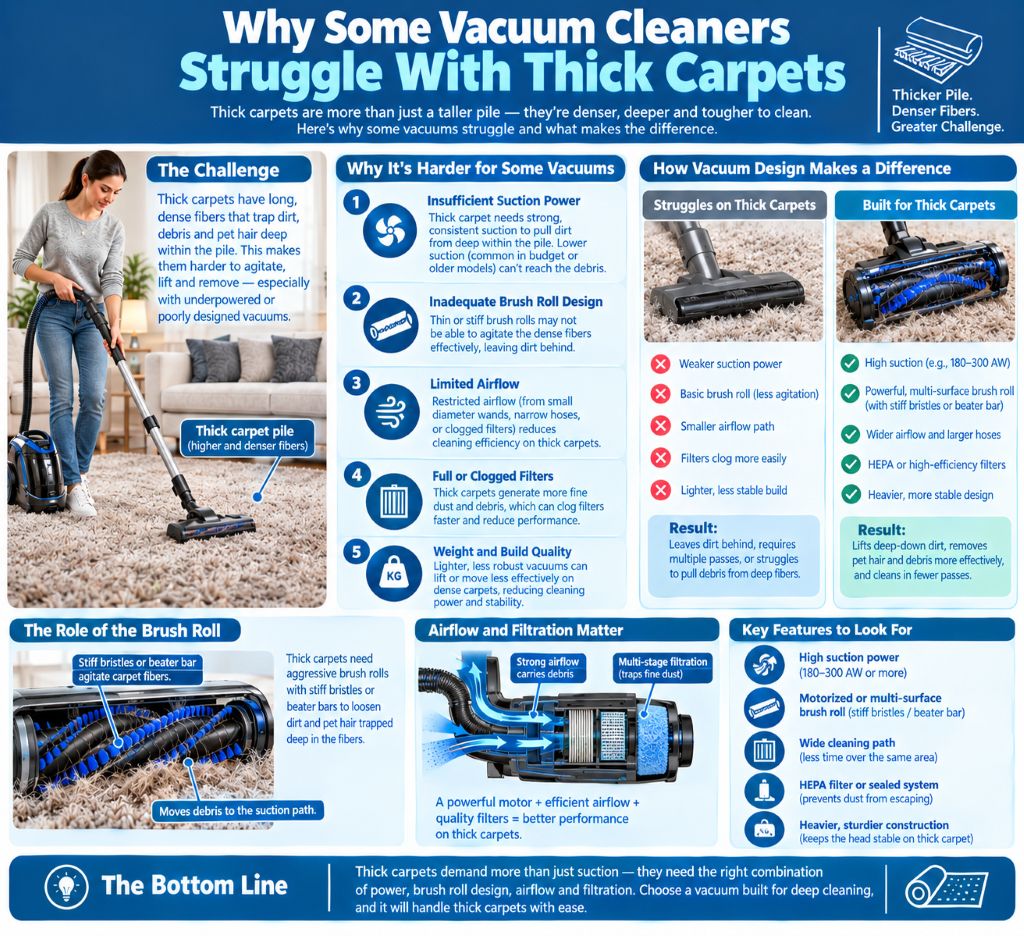
- Thick carpet creates airflow resistance that many vacuums cannot overcome.
- Strong suction without height adjustment can seal a vacuum to the floor.
- Dense fibers can stall or block a spinning brush roll entirely.
- Area rugs add extra risk of being pulled into the brush chamber.
- The right height settings and brush type fix most struggling vacuums.
Pushing a vacuum across thick carpet sometimes feels like pushing against a wall. However, this struggle has clear mechanical causes. Suction, brush design, and height settings all play a role. This guide explains why some vacuums fail on thick carpet. You will also learn how to fix or avoid the problem.
What Makes Carpet “Thick” in the First Place
Not all carpet creates the same challenge for a vacuum. Understanding the different types helps explain why some struggle more than others.
According to a recent vacuum testing guide, thick carpet is not one single thing. It includes high-pile carpet over half an inch tall, dense plush carpet, shag carpet with long loose fibers, and deep pile area rugs. Each type demands more from a vacuum than standard low-pile carpet does.
This variety matters because different fiber structures create different problems. Long shag fibers can wrap and tangle around a spinning brush. Dense plush fibers create thick resistance against airflow and movement. Therefore, a vacuum that handles one thick carpet type well may still struggle with another.
The same testing guide notes a common result across standard machines. Standard vacuums often stall, leave embedded dirt behind, or simply refuse to glide on plush surfaces. This happens because most vacuums are designed and tested primarily on low to medium pile carpet, which represents the most common flooring type.
Recognizing your specific carpet type is the first step toward solving the problem. A vacuum built for shag carpet may not perform the same way on dense frieze. Therefore, match your equipment to your actual carpet, not to carpet in general.
The Suction and Sealing Problem
Strong suction sounds like a clear benefit. However, on thick carpet, powerful suction without proper adjustment often backfires.
A vacuum enthusiast forum thread describes this problem well. One user struggled to push a vacuum across thick carpet, noting that opening the suction release collar did not make pushing any easier. The discussion points to two causes working together: a lack of manual height adjustment, and the machine’s own strong suction power.
Another forum participant offers a vivid comparison. They describe pushing one high-suction vacuum on thick frieze carpet as similar to pushing a large SUV up a steep hill. Meanwhile, a different vacuum without a manual height adjustment moved easily across the same surface. This contrast shows that raw suction power alone does not determine ease of use.
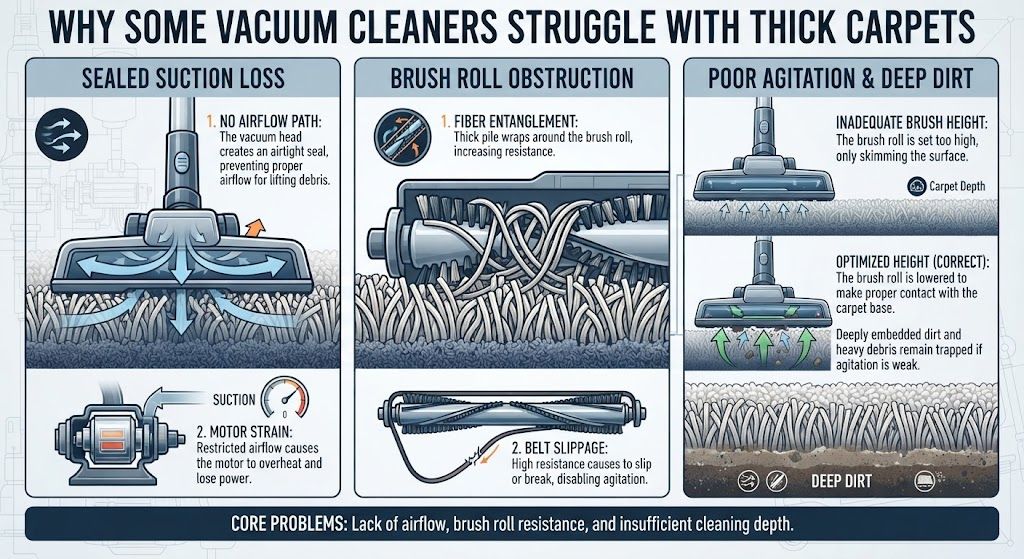
The underlying mechanism is straightforward. A recent thick-carpet buying guide explains that on dense carpet, many vacuums seal themselves to the floor and become nearly impossible to push. This sealing happens when the vacuum head sits too close to the carpet surface. Airflow becomes so restricted that suction essentially locks the head in place.
Area rugs add an extra layer of risk to this same problem. One vacuum manufacturer’s support page explains that strong suction can cause lightweight carpets or rugs to be sucked upward into the brush roll chamber. This blocks the brush roll and can stop it from rotating altogether.
Why Brush Rolls Stall on Dense Fibers
The spinning brush roll does essential work on carpet. However, very thick or dense fibers can overpower the motor driving that brush.
A vacuum manufacturer’s troubleshooting guide identifies this issue directly. It explains that thick, high-pile carpets can prevent the roller brush from spinning because heavy fibers create excessive resistance. This resistance works against the brush motor, similar to how thick mud might resist a spinning wheel.
This stalling creates a frustrating cycle for the user. A stalled brush roll no longer agitates the carpet effectively. Meanwhile, the vacuum head often becomes harder to push, since the brush is not helping propel it forward. As a result, both cleaning performance and ease of use suffer together.
Fiber entanglement compounds this mechanical resistance. The same troubleshooting source recommends checking for entangled strands that might prevent the brush from spinning at all. Long carpet fibers, hair, or thread can wrap tightly around the brush shaft. This buildup adds physical resistance on top of the fiber density problem.
Manufacturers have responded to this challenge with specialized brush designs. A recent high-pile carpet buying guide highlights features like ultra-soft brushrolls and self-cleaning mechanisms as direct responses to this stalling problem. These designs aim to maintain rotation even against dense, resistant fibers.
How Height Adjustment Solves Most Problems
Height adjustment stands out as the single most important fix for thick carpet struggles. This feature controls how closely the brush head sits against the carpet pile.
The forum discussion referenced earlier points directly to this factor. The user’s difficulty pushing their vacuum was attributed partly to the machine lacking a manual height adjustment feature. Without this control, the head sits at a fixed distance that may work poorly on unusually thick carpet.
A recent vacuum review explains the benefit clearly. Adjustable height reduces pushing force because the vacuum can be raised slightly off the deepest part of the pile. This adjustment reduces excessive sealing against the floor while still allowing the brush to reach and agitate the fibers.
Quality varies significantly between models in this area. A high-pile carpet testing guide reports comparing vacuums specifically on how easily each unit pushed across the pile and whether the brush roll stalled. Testers found major differences between models with proper adjustable height and those without it.
Follow these steps to reduce struggle when using height-adjustable equipment.
- Identify your vacuum’s height adjustment dial or lever.
- Raise the setting before starting on thick or plush carpet.
- Test push resistance at each height level before committing.
- Lower the brush only if dirt pickup seems incomplete.
- Readjust when moving between different carpet thicknesses.
Solutions for Vacuums Already Struggling
If your current vacuum struggles on thick carpet, several practical fixes exist before considering a full replacement.
- Turn off the spinning brush roll using a dedicated deactivation button
- Lower suction intensity using available control settings
- Raise the height adjustment to the maximum available setting
- Remove tangled hair or fibers wrapped around the brush shaft
- Consider a soft roller brush designed specifically for thick pile
A vacuum troubleshooting guide recommends turning off the spinning brush entirely when a model has this dedicated feature. Suction alone can still lift some surface debris even without brush agitation. This workaround helps when carpet proves too thick for the brush to handle safely.
Adjusting suction control offers another practical option. The same troubleshooting source notes that some vacuum models include suction control measures allowing users to reduce intensity. Lower suction reduces the sealing effect that makes pushing so difficult on dense carpet.
For persistent brush stalling, a specialized soft roller brush often helps. One manufacturer’s support guidance recommends this accessory specifically for thick or plush carpet situations. This modified brush design reduces resistance against dense fibers while still providing some agitation.
Always check for simple blockages before assuming a deeper mechanical problem exists. Entangled hair, thread, or fiber strands around the brush roll frequently cause stalling that looks like a carpet compatibility issue. Clearing this buildup sometimes solves the problem entirely.
Choosing a Vacuum Built for Thick Carpet
If ongoing struggles suggest it is time for a new vacuum, certain features matter most for thick carpet performance.
- Manual or automatic height adjustment across multiple settings
- Adjustable suction control separate from brush engagement
- A brush roll designed to resist tangling and stalling
- Strong but controllable suction power, not maximum power alone
- Lightweight overall design to reduce pushing effort
A recent testing guide for high-pile carpet vacuums evaluated models specifically on push resistance and brush stalling across two full weeks of use per model. This kind of extended, hands-on testing reveals problems that spec sheets alone cannot show. Therefore, look for reviews based on real thick-carpet testing rather than general performance claims.
Interestingly, price does not always predict performance on this specific challenge. One thick-carpet testing guide notes that the most expensive model tested was not the best performer, while a budget option under $150 outperformed several mid-range choices. This finding suggests that design features matter more than overall price when it comes to thick carpet.
Pay close attention to how a brush roll is described in product materials. Terms like self-cleaning brushroll or ultra-soft brushroll signal design choices meant specifically to address the stalling and tangling problems common on dense fibers. These features directly target the mechanical issues explained earlier in this guide.
Conclusion
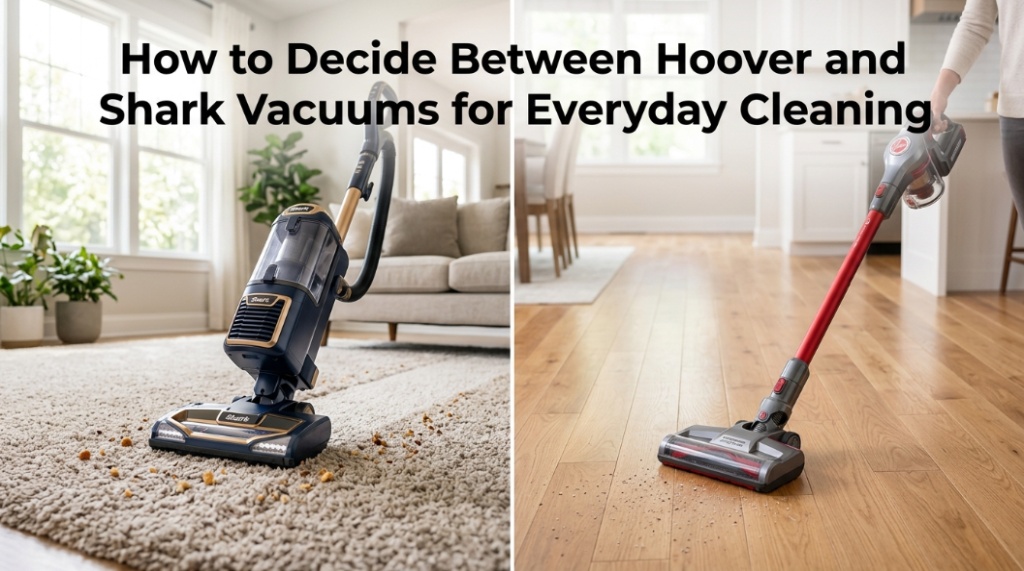
Thick carpet challenges vacuums through a combination of airflow resistance, brush stalling, and excessive sealing against the floor. Strong suction without proper height adjustment often makes pushing harder, not easier. Dense fibers can also overpower a brush roll’s motor, causing it to stall or tangle. The right height settings, brush type, and suction control solve most of these problems. If you’re comparing different options for everyday use, see our guide to decide between Hoover and Shark vacuums for everyday cleaning to understand how their designs handle common household surfaces.
Understanding these mechanics helps you troubleshoot your current vacuum or choose a better one. Adjust your height settings and check for tangled fibers before assuming your vacuum has failed. Test these fixes on your thickest carpet today, and consider a model built specifically for deep pile if problems continue.
Frequently Asked Questions
Why is my vacuum so hard to push on thick carpet?
Strong suction without height adjustment often seals the vacuum to the floor. Raising the height setting usually helps.
Why does my brush roll stop spinning on carpet?
Dense fibers create resistance that can stall the motor. Tangled hair or thread can also block rotation.
Can I use a regular vacuum on shag carpet?
Standard vacuums often struggle with shag carpet’s long fibers. A soft roller brush designed for plush pile works better.
Does higher suction always mean better carpet cleaning?
No, excessive suction without adjustment can make pushing difficult. Balanced, controllable suction works better than maximum power alone.
How do I stop my vacuum from pulling up area rugs?
Reduce suction intensity or raise the height setting. This prevents the rug from being pulled into the brush chamber.