








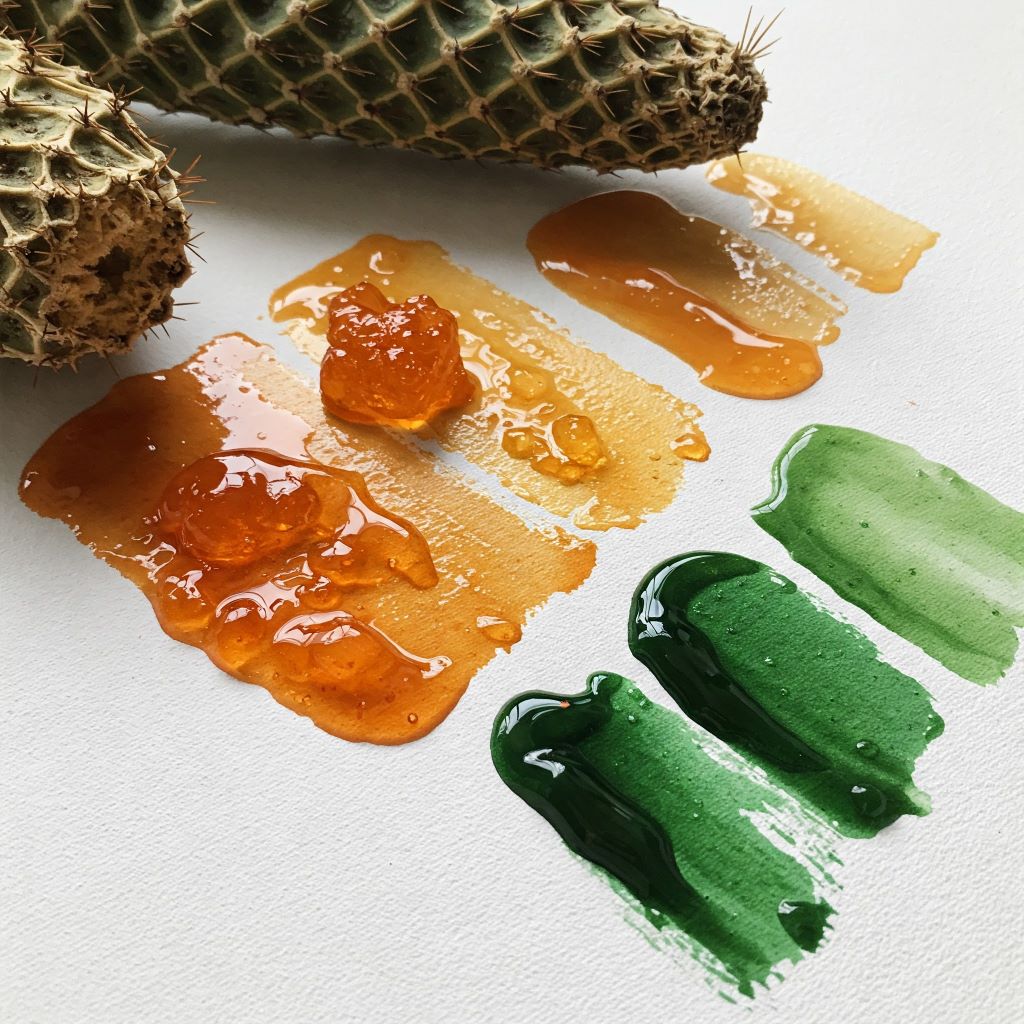
The quest for sustainable and eco-friendly alternatives in various industries is intensifying, and the realm of paints and coatings is no exception. While synthetic polymers derived from petrochemicals have long dominated the market, concerns about their environmental impact and potential health hazards are driving a resurgence of interest in natural binders. Among the most intriguing and promising candidates emerging from this movement is cactus resin as natural paint binders, a substance with a rich history and untapped potential. This article delves into the fascinating world of cactus resin as a natural paint binder, exploring its properties, applications, benefits, and the scientific research underpinning its growing popularity.
A Legacy of Resilience: Unpacking the Composition and Properties of Cactus Resin
Cactus resin, a viscous substance exuded by various cactus species, particularly those belonging to the Opuntia and Ferocactus genera, is more than just a sticky sap. It’s a complex blend of polysaccharides, terpenes, phenolic compounds, and other organic molecules, meticulously crafted by nature to protect the plant from harsh desert conditions. The specific composition varies depending on the cactus species, its geographical location, and environmental factors. However, the common thread running through all cactus resins is their remarkable ability to form a durable, water-resistant film. This inherent property makes them exceptionally suitable as natural binders in paints and coatings.
The high polysaccharide content, primarily composed of complex sugars like arabinogalactans and rhamnogalacturonans, contributes to the resin’s film-forming capabilities. These polysaccharides create a network of interconnected chains that solidify upon drying, resulting in a cohesive and robust film. Terpenes, volatile organic compounds that give cactus resin its characteristic aroma, enhance its water resistance and contribute to its antimicrobial properties. Phenolic compounds, powerful antioxidants, further bolster the resin’s durability by protecting it from UV degradation and microbial attack.
From Ancient Traditions to Modern Applications: The Versatility of Cactus Resin Paints
Historically, indigenous communities in arid regions have long recognized the value of cactus resin. They utilized it for various purposes, including waterproofing pottery, creating adhesives, and even as a traditional medicine. Today, this ancient knowledge is being rediscovered and refined, paving the way for innovative applications in the paint industry. Cactus resin-based paints offer a compelling alternative to conventional paints in several key areas:
- Interior and Exterior Wall Paints: Cactus resin can be formulated into durable and breathable paints for both interior and exterior walls. Its natural water resistance and UV protection make it suitable for a wide range of climates, while its breathability allows moisture to escape, preventing mold growth and enhancing indoor air quality.
- Wood Coatings and Varnishes: The resin’s film-forming properties make it an excellent choice for wood coatings and varnishes. It provides a protective layer that enhances the wood’s natural beauty while shielding it from moisture, scratches, and UV damage.
- Artistic Paints and Pigment Binders: Artists are increasingly drawn to the unique textural qualities and natural pigments that can be achieved with cactus resin paints. Its ability to bind pigments effectively allows for vibrant and long-lasting artworks.
- Craft and DIY Projects: The versatility of cactus resin makes it ideal for various craft and DIY projects. It can be used to create natural glues, sealants, and decorative coatings for a wide range of materials.
- Architectural Restoration: In restoration projects that aim for historical accuracy, natural binders like cactus resin are invaluable. They provide a compatible and authentic alternative to modern synthetic paints, preserving the integrity of historical structures.
The Green Revolution: Environmental and Health Benefits of Cactus Resin Paints
The growing interest in cactus resin paints is driven by their significant environmental and health benefits. Compared to conventional paints, which often contain volatile organic compounds (VOCs), toxic solvents, and heavy metals, cactus resin paints offer a sustainable and eco-friendly alternative:
- Reduced VOC Emissions: Cactus resin is a natural, plant-based material that emits minimal VOCs, contributing to cleaner indoor and outdoor air quality. This is particularly important for individuals with respiratory sensitivities and those concerned about the long-term health effects of VOC exposure.
- Biodegradability and Renewable Resource: Unlike synthetic polymers derived from fossil fuels, cactus resin is biodegradable and derived from a renewable resource. Cacti are highly adaptable plants that thrive in arid environments, requiring minimal water and resources to grow.
- Reduced Carbon Footprint: The production of cactus resin paints has a significantly lower carbon footprint compared to conventional paints. Cacti naturally sequester carbon dioxide from the atmosphere, contributing to climate change mitigation.
- Reduced Reliance on Petrochemicals: By utilizing cactus resin, we can reduce our reliance on petrochemicals, which are non-renewable resources with significant environmental and social costs.
- Enhanced Soil Health: Cactus cultivation can contribute to soil health by improving soil structure, water retention, and nutrient cycling.
Scientific Validation: Research and Development of Cactus Resin Paint Technology

While traditional knowledge has long recognized the value of cactus resin, scientific research is now providing further validation and driving innovation in its application as a paint binder. Researchers are investigating various aspects of cactus resin, including its chemical composition, film-forming mechanisms, and compatibility with different pigments and additives.
Studies have shown that cactus resin can form durable and water-resistant films with excellent adhesion to various substrates. Researchers are also exploring methods to enhance the resin’s properties, such as its flexibility, hardness, and UV resistance, through modifications and blending with other natural materials.
Furthermore, research is being conducted to optimize the extraction and processing of cactus resin, making it more efficient and cost-effective. This includes developing sustainable harvesting practices that minimize environmental impact and ensure the long-term availability of this valuable resource.
Challenges and Opportunities: The Future of Cactus Resin Paints
Despite its promising potential, the widespread adoption of cactus resin paints faces certain challenges. One of the primary challenges is the availability and consistency of cactus resin. The production of cactus resin is dependent on factors such as climate, cactus species, and harvesting practices. Ensuring a stable and reliable supply chain is crucial for the commercial success of cactus resin paints.
Another challenge is the need for further research and development to optimize the formulation and application of cactus resin paints. This includes developing standardized testing methods to evaluate the performance of cactus resin paints and ensuring their compatibility with existing paint application equipment.
However, these challenges also present opportunities for innovation and collaboration. By investing in research and development, we can overcome these obstacles and unlock the full potential of cactus resin as a sustainable and high-performance paint binder.
Essential Tips for Painting Your Home: From Color Selection to Execution
People Also Ask (FAQs):
- Is cactus resin paint durable?
- Yes, cactus resin forms a durable and water-resistant film, making it suitable for both interior and exterior applications.
- Is cactus resin paint environmentally friendly?
- Absolutely. Cactus resin is a natural, biodegradable material derived from a renewable resource, emitting minimal VOCs.
- Can cactus resin paint be used on wood?
- Yes, cactus resin makes an excellent wood coating and varnish, providing a protective layer that enhances the wood’s natural beauty.
- Where can I find cactus resin paint?
- Cactus resin paints are becoming increasingly available through specialized eco-friendly paint suppliers and online retailers.
- Are there different colors of cactus resin paint?
- Yes, pigments can be added to cactus resin to produce a wide range of colors.
- Is Cactus resin water soluble?
- The raw resin is not highly water soluble, but when processed and formulated for paint it can be made into water based paints.
- Does cactus resin have a strong smell?
- Cactus resin has a characteristic earthy, slightly sweet smell due to the terpenes present. This smell dissipates as the paint dries.
Conclusion: A Sustainable Future Painted with Nature’s Wisdom
Cactus resin represents a remarkable example of nature’s ingenuity and its potential to provide sustainable solutions for modern challenges. By embracing this ancient wisdom and combining it with cutting-edge scientific research, we can pave the way for a future where paints and coatings are not only aesthetically pleasing but also environmentally responsible. The journey towards widespread adoption of cactus resin paints may have its challenges, but the benefits for our planet and our health are undeniable. As we continue to explore the vast potential of natural materials, cactus resin stands as a testament to the power of desert alchemy, painting a brighter and more sustainable future for generations to come.
Read More:
First-Time Painter? Six Easy Guide
How to Decorate a Fireplace Mantel: Adding Warmth and Style to Your Space