



You leave your bike for five minutes to grab a coffee. When you come back, the frame is still there, but the front wheel is gone. This common scenario happens because most riders choose a lock based on price or convenience rather than their actual riding habits. The right lock for a quick commuter stop is different from the one you need for a bike left outside a train station all day. If you are looking for a lightweight option for low-risk situations, practical cable lock options from Master Lock offer a balance of portability and deterrence. This guide will help you match a lock to your routine without overspending or underestimating the risk.
Quick Answer
Match your lock to the risk level and duration of your stops. For short stops in low-crime areas, a cable lock provides lightweight convenience. For longer stops or higher-risk areas, you need a hardened steel U-lock or heavy-duty chain. Always secure the frame and at least one wheel to a fixed object, and never rely on a cable lock for overnight parking.
Key Takeaways
- Lock type should match the duration and location of your stops, not just your bike’s value.
- Cable locks offer portability and ease of use but are best for short, low-risk stops.
- U-locks and heavy chains provide superior security but are heavier and less convenient to carry.
- Proper locking technique—securing the frame and wheels to a fixed object—matters as much as the lock itself.
- No lock is theft-proof; the goal is to make your bike a less attractive target than the one next to it.
Match the Lock to Your Riding Routine
Your riding habits dictate your security needs more than the price of your bike. A road cyclist who never lets the bike out of sight needs a different lock than a commuter who parks at a train station for nine hours. Before buying, ask yourself three questions: How long will the bike be unattended? How public and well-lit is the location? How much does losing the bike would cost you in money and inconvenience?
If you make quick stops at cafes, a farmers market, or a friend’s apartment, you fit the “short-stop rider” profile. If you commute to a workplace with a bike rack or leave your bike at a campus library for hours, you are a “long-stay rider.” If you park overnight on a city street or in a shared garage, you are a “high-risk rider.” Each profile points to a different lock category.
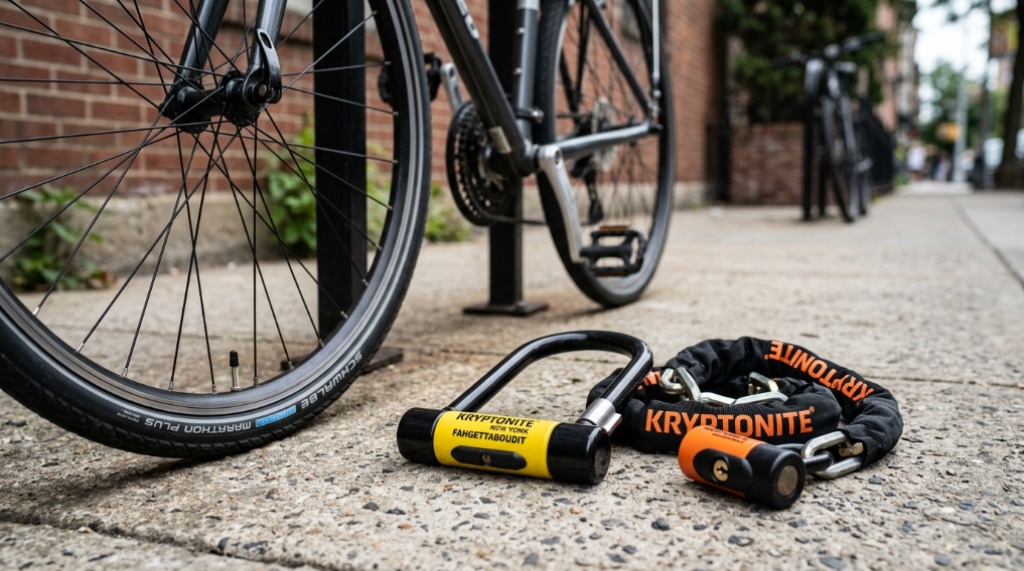
Short-Stop Rider: Focus on Convenience and Deterrence
For stops under 30 minutes in visible, public areas, a cable lock is often sufficient. These locks are lightweight, coil easily around a seat post, and open quickly with a combination or key. They deter opportunistic thieves who do not carry tools. A cable lock is also ideal if you need to lock multiple bikes together or secure a bike to an irregular rack that a rigid U-lock cannot fit.
The trade-off is clear: cable locks can be cut with compact bolt cutters. They are not designed to withstand a determined attack. That is why they should never be your only lock for a bike left unattended for long periods.
Long-Stay Rider: Prioritize Cutting Resistance
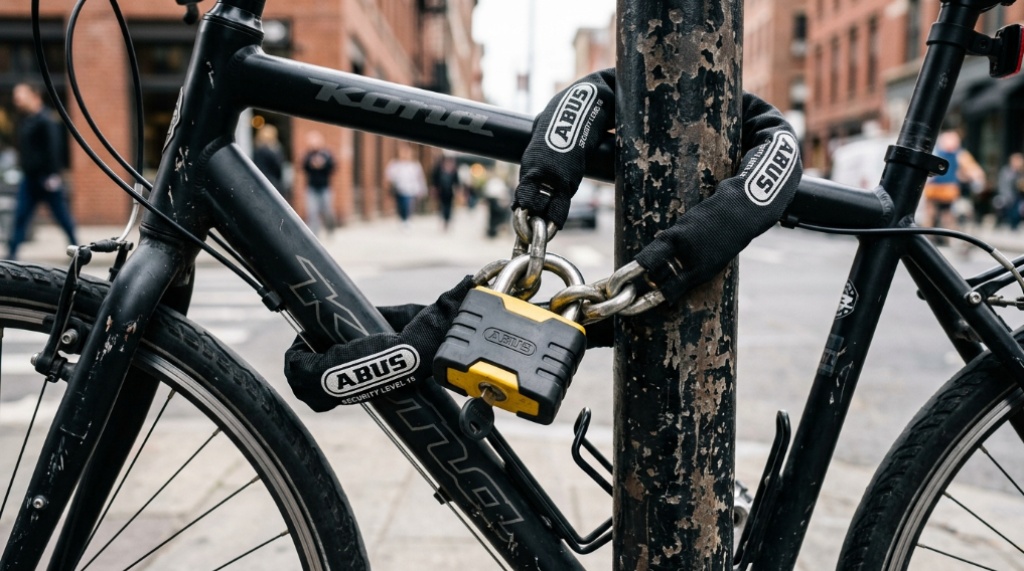
If your bike sits in the same spot for hours, a thief has time to work. You need a lock that resists cutting and prying. A U-lock with a hardened steel shackle is the standard choice. The shackle is thick enough to defeat bolt cutters and requires power tools to remove. A heavy-duty chain lock offers similar security and more flexibility in how you wrap it around the frame and rack.
The downside is weight. A quality U-lock can weigh several pounds, and a chain can weigh even more. You will need a frame-mounted bracket or a bag to carry it comfortably. For many long-stay riders, the extra weight is a fair trade for the ability to leave the bike with confidence.
High-Risk Rider: Layer Your Defenses
Overnight parking or parking in areas with active bike theft requires more than one lock. Use a primary U-lock or chain through the frame and rear wheel, and add a secondary cable lock for the front wheel. This increases the time and tools required to steal the bike. It also protects your wheels, which are often targets because they are easy to remove and resell.
If you park in the same high-risk location daily, consider leaving a heavy chain lock at the spot and carrying only a lighter lock for the ride. This reduces the weight you carry while maintaining strong security where it matters.
Cable Locks vs. U-Locks vs. Chain Locks
Each lock style has a distinct set of strengths and weaknesses. The table below summarizes how they compare for the most common riding habits.
| Lock Type | Security Level | Weight & Portability | Best For | Main Limitation |
|---|---|---|---|---|
| Cable Lock | Low to Moderate | Lightweight and flexible | Short stops, low-crime areas, multiple bikes | Can be cut with bolt cutters |
| U-Lock | High | Moderate to heavy | Long stays, commuters, urban parking | Limited locking points; can be bulky to carry |
| Chain Lock | High | Heavy | Overnight parking, high-risk areas | Weight; requires a bag or frame mount |
The best approach for many riders is a combination: a U-lock for the frame and rear wheel, plus a cable lock for the front wheel or accessories. This layered strategy covers the most common theft methods without requiring a single, extremely heavy lock.
What to Look For in a Cable Lock
Not all cable locks are equal. If you choose a cable lock for convenience, focus on these features to get the most security possible from the category.
- Cable diameter: Thicker cables (10mm and above) resist cutting better than thin ones. A 12mm cable is a reasonable minimum for urban use.
- Locking mechanism: Combination locks avoid the problem of lost keys, but keyed locks often offer smoother operation. Choose a combination you can reset if needed.
- Length: A longer cable (4 to 6 feet) gives you more options for locking to trees, poles, or multiple bikes. A shorter cable is lighter but less flexible.
- Coating: A vinyl or rubber coating protects your bike’s paint from scratches and reduces noise while riding.
- Weather resistance: Look for locks with rust-resistant materials if you ride in wet conditions.
A cable lock with a combination mechanism is a practical choice for riders who do not want to carry keys. It is easy to use, easy to store, and sufficient for the short-stop profile described above, Before securing your bicycle, always ensure your vehicle can handle the extra load safely by learning how to check bike rack weight capacity before buying.
Locking Technique Matters as Much as the Lock
A high-security lock used incorrectly is almost as vulnerable as a cheap one. Follow these practices to get the most from any lock:
- Lock the frame, not just a wheel. Thieves can remove a wheel in seconds and leave the frame behind. Always pass the lock through the frame.
- Secure to a fixed, immovable object. A signpost that can be lifted, a small tree, or a weak rack offers little protection. Choose a sturdy bike rack or a thick, anchored post.
- Keep the lock tight. A loose lock gives a thief room to insert a pry bar or jack. Minimize the empty space inside the lock.
- Lock high. If the rack allows, keep the lock off the ground. This makes it harder to smash the lock against a hard surface.
- Remove accessories. Lights, bags, and quick-release seats can be stolen even if the bike is locked. Take them with you or secure them with a secondary cable.
Common Mistakes to Avoid
Many bike thefts happen because of avoidable errors. Watch out for these common mistakes:
- Buying a lock based only on price. A cheap lock may cost less upfront but can lead to the loss of a much more expensive bike.
- Using a cable lock for overnight parking. Cable locks are not designed for extended exposure to theft attempts.
- Locking only the wheel. This is one of the most common ways bikes are stolen. The frame is the most valuable part.
- Assuming a locked bike is safe anywhere. Even the best lock can be defeated given enough time and privacy. Park in visible, well-lit areas when possible.
- Not registering your bike. If your bike is stolen, a serial number and photos increase the chance of recovery.
Frequently Asked Questions
Is a cable lock enough for a commuter bike?
It depends on where and how long you park. For short stops under 30 minutes in a visible area, a cable lock is often sufficient. For all-day parking at a train station or workplace, a U-lock or chain lock is a better choice.
How much should I spend on a bike lock?
Spend according to the risk. If your bike is expensive or parked in a high-theft area, a higher-quality lock is a worthwhile investment. A general guideline is to spend roughly 10% of your bike’s value on security, but adjust based on your parking situation.
Can I use two cable locks instead of a U-lock?
Using two cable locks adds a layer of deterrence, but both can be cut with the same tool. A better combination is one U-lock for the frame and one cable lock for the wheels. This forces a thief to use different tools.
Are combination locks less secure than keyed locks?
Not inherently. The security depends on the lock’s build quality, not the locking mechanism. A well-made combination lock can be just as secure as a keyed lock. The main advantage of a combination lock is that you cannot lose the key.
What is the most secure way to lock a bike?
Use a U-lock or chain lock through the frame and rear wheel, secured to a fixed object. Add a cable lock for the front wheel. Park in a visible location and remove any easily stolen accessories.
Conclusion
Choosing the right bike lock comes down to matching security to your actual riding habits. Short-stop riders can rely on a lightweight cable lock for convenience, while long-stay and high-risk riders need the cutting resistance of a U-lock or chain. Whichever you choose, lock the frame to a fixed object and use good technique. A lock is not an absolute guarantee, but the right one makes your bike a harder target than the one beside it.