Buying a bike rack seems straightforward until you realize that choosing the wrong one could damage your vehicle, lose your bikes on the highway, or even cause an accident. Weight capacity is the single most important specification you need to verify before making a purchase. Yet many cyclists overlook this critical detail and end up with equipment that can’t safely carry their bikes.
Modern bicycles vary dramatically in weight. A lightweight road bike might weigh just 15 pounds, while an electric mountain bike can easily tip the scales at 70 pounds or more. Additionally, you need to account for accessories like panniers, child seats, and water bottles. Therefore, understanding weight ratings and how to properly evaluate them is essential for safe bike transportation.
This comprehensive guide will walk you through everything you need to know about checking and understanding bike rack weight limits. You’ll learn how to read specifications, account for different bike types, and make an informed decision that keeps your bikes and vehicle safe.
Understanding Weight Capacity Basics
Weight capacity refers to the maximum total weight a bike rack can safely support. Manufacturers determine this number through testing and engineering calculations. However, this simple definition hides several important nuances that affect your purchasing decision.
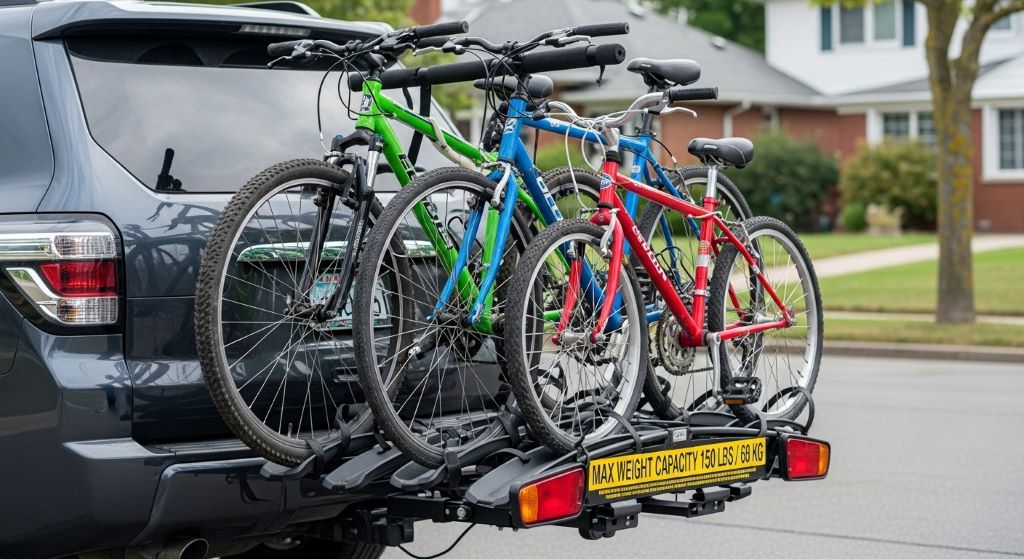
Most bike racks list two separate weight ratings. The total capacity indicates how much weight the entire rack can hold across all bikes combined. Individual bike capacity tells you the maximum weight per bike slot. Both numbers matter when selecting the right rack for your needs.
Exceeding these limits creates serious safety hazards. The rack might bend, break, or detach from your vehicle while driving. Your bikes could fall off, creating dangers for other drivers. Furthermore, exceeding weight limits often voids manufacturer warranties, leaving you responsible for any damage or accidents.
Vehicle compatibility adds another layer to consider. Your car’s hitch, trunk, or roof has its own weight limitations that might be lower than what the rack itself can handle. Therefore, you need to verify that your vehicle can support both the rack and your loaded bikes.
Types of Bike Racks and Their Capacity Ranges
Different mounting systems offer varying weight capacities based on their design and attachment method. Understanding these categories helps you narrow down appropriate options quickly.
Hitch-mounted racks generally offer the highest weight capacities. These racks attach to a receiver hitch on your vehicle’s rear and can typically handle 100 to 300 pounds total weight. Platform-style hitch racks, which support bikes by their wheels rather than frames, often have higher individual bike limits compared to hanging styles.
Trunk-mounted racks use straps to attach to your vehicle’s trunk or hatchback. These racks typically support 70 to 105 pounds total. Their lower capacity reflects the attachment method’s limitations rather than the rack’s structural strength. The straps and contact points on your vehicle can only handle so much stress.
Roof-mounted racks require lifting bikes overhead, which naturally limits practical capacity. Most roof racks support 30 to 50 pounds per bike. While structurally they might handle more, the difficulty of lifting heavy bikes overhead makes higher capacities impractical for most users.
Truck bed racks utilize the solid foundation of a pickup bed and can support impressive weights. Depending on design, these racks might handle anywhere from 100 to 400 pounds. However, you’re still limited by your truck’s payload capacity, which includes passengers, cargo, and the bikes themselves.
Calculating Your Total Weight Needs
Before you can evaluate whether a rack meets your requirements, you need to know exactly how much weight you’re planning to carry. This calculation requires more than just knowing your bike’s weight.
Start by weighing each bike you plan to transport. Bathroom scales work for lighter bikes, but you might need luggage scales or a bike shop’s assistance for heavier models. Don’t estimate or rely on manufacturer specifications, as actual weights often differ from advertised figures due to added components and accessories.
Add the weight of any accessories that stay mounted during transport. Water bottles, bike computers, and lights typically stay on the bike. However, remove heavy accessories like panniers or child seats if possible to reduce the total load.
Account for a safety margin of at least 10 to 15 percent below the maximum rated capacity. This buffer protects against unexpected stress from road vibrations, bumps, and dynamic forces during driving. Moreover, it compensates for any measurement errors in your calculations.
Consider future bike purchases or changes. If you might upgrade to an electric bike or add features to your current bike, choose a rack with extra capacity now. Replacing a rack because you exceeded its limits later costs more than buying the right capacity initially.
Special Considerations for Electric Bikes
Electric bikes present unique challenges when selecting a rack due to their significantly higher weight. Understanding ebike rack capacity requirements helps you avoid costly mistakes and safety issues.
Most electric bikes weigh between 40 and 70 pounds, with some electric cargo bikes exceeding 80 pounds. This weight comes from heavy battery packs, robust motors, and reinforced frames necessary to handle electric assistance. Consequently, many standard bike racks can’t safely accommodate even a single electric bike.
Battery placement affects how you transport electric bikes. Some racks specify whether batteries should remain installed or be removed during transport. Removing batteries reduces weight and lowers the center of gravity, improving stability. However, frequent battery removal can be inconvenient and may not be practical for all electric bike designs.
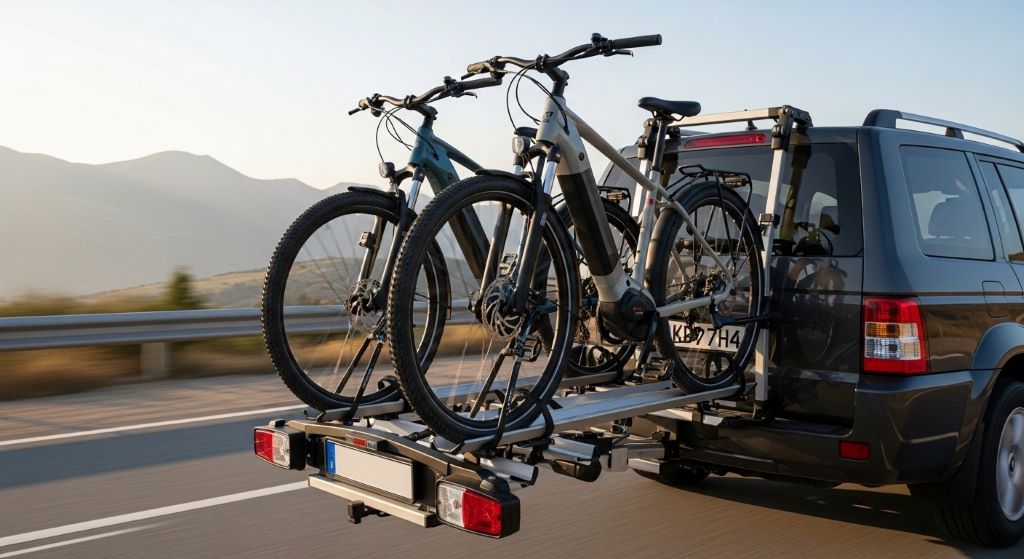
Look specifically for racks advertised as electric bike compatible. These heavy duty racks feature reinforced construction, stronger attachment systems, and higher weight ratings per bike. Many accommodate 60 to 75 pounds per bike slot, making them suitable for most electric models.
Check whether the rack’s design accommodates electric bike frames. Some electric bikes have unusual frame geometries, oversized down tubes housing batteries, or integrated components that don’t fit standard rack designs. Additionally, verify that wheel size compatibility matches your electric bike’s specifications.
Reading and Interpreting Manufacturer Specifications
Manufacturer specifications provide crucial information, but you need to know how to interpret them correctly. Not all specifications are created equal, and some details matter more than others.
Look for clearly stated total capacity and individual bike capacity numbers. Reputable manufacturers display these prominently in product descriptions and user manuals. Be suspicious of racks that only list one capacity number or use vague language like “carries multiple bikes” without specific weights.
Verify whether listed capacities assume bikes are evenly distributed. Some racks lose capacity if bikes aren’t balanced properly. For example, a rack rated for 140 pounds total might be limited to 70 pounds per side. This distinction becomes important when carrying bikes of different weights.
Check for testing standards and certifications. Racks tested according to recognized safety standards provide more reliable capacity ratings. Look for mentions of testing protocols, safety certifications, or compliance with industry standards.
Read the fine print about weight distribution and loading requirements. Some manufacturers specify maximum weights for different mounting positions. Bikes positioned farther from the vehicle might have lower individual limits due to increased leverage on the rack’s structure.
Understand warranty terms related to weight capacity. Many warranties become void if you exceed stated limits. Knowing exactly what’s covered and what actions void coverage helps you make informed decisions and protect your investment.
Vehicle Compatibility and Limitations
Your vehicle’s capabilities play an equally important role in safe bike transportation. Even the strongest rack becomes dangerous if your vehicle can’t support the total weight.
Hitch receivers have their own weight ratings separate from the rack. A Class I hitch typically supports up to 200 pounds of tongue weight, while Class II handles 350 pounds, and Class III and IV support 500 to 1,000 pounds. Your rack and bikes together must not exceed your hitch’s tongue weight rating.
Roof load capacity varies significantly between vehicles. Sedans might only support 100 to 150 pounds on the roof, while SUVs could handle 200 pounds or more. Consult your vehicle’s owner manual for exact specifications. Remember that this total includes the weight of crossbars, rack, and bikes combined.
Trunk and hatchback mounting points have limited strength compared to hitches. The contact points where straps attach can only handle so much stress before damaging your vehicle’s body panels or paint. This limitation explains why trunk racks have lower capacities than hitch-mounted alternatives.
Consider your vehicle’s overall payload capacity. This rating indicates the total weight your vehicle can safely carry, including passengers, cargo, bikes, and racks. Subtracting your passengers’ weight and other cargo from payload capacity tells you how much remains for bike transportation.
Identifying Heavy Duty Racks for Maximum Capacity
When standard racks don’t meet your needs, heavy duty racks provide the solution. These specialized products feature enhanced construction and engineering to support greater weights safely.
Heavy duty racks use thicker steel or aluminum tubing in their construction. This reinforced framework distributes weight more effectively and resists bending under heavy loads. Additionally, welding quality and joint design in premium racks exceed what you’ll find in budget models.
Attachment systems on heavy duty racks provide more secure vehicle connection. Hitch racks might use anti-wobble devices, locking hitch pins, and multiple contact points to distribute forces. These features prevent the rack from moving or swaying under the weight of heavy bikes.
Bike cradles and wheel trays in platform-style racks are engineered differently in heavy duty models. Wider trays accommodate fat bikes and provide more stable support. Ratcheting straps secure bikes more firmly, preventing movement during transport that could stress the rack’s structure.
Look for adjustable features that help you optimize weight distribution. Some heavy duty racks allow you to adjust bike spacing, alter the position of individual trays, or modify mounting angles to achieve better balance with heavy loads.
Price generally reflects quality and capacity in bike racks. While expensive doesn’t always mean better, very cheap racks rarely provide adequate capacity or durability for heavy bikes. Budget appropriately for equipment that matches your transportation needs safely.
Testing and Verifying Weight Capacity Claims
Manufacturer claims provide a starting point, but independent verification gives you additional confidence. Several methods help you assess whether a rack truly meets its stated capacity.
Research independent reviews from cycling publications and consumer testing organizations. These sources often conduct their own testing and may identify discrepancies between claimed and actual performance. Pay particular attention to reviews from users transporting similar bike types to yours.
Check for user reports of failures or problems at or below rated capacity. Online forums and review sections can reveal patterns of issues that suggest a rack doesn’t actually meet its advertised specifications. However, distinguish between proper use failures and problems caused by exceeding limits or improper installation.
Examine the rack’s construction in person if possible. Quality materials, solid welding, and robust hardware suggest a rack can meet its claimed capacity. Thin tubing, poor welds, or flimsy components raise red flags about whether ratings are realistic.
Consider the manufacturer’s reputation and history. Established brands with long track records are more likely to provide accurate specifications and stand behind their products. Unknown manufacturers might inflate capacity claims to compete with reputable brands.
Ask bike shop staff about their experiences with specific models. Shops that sell and install racks regularly encounter feedback from customers and can often identify which products truly perform as advertised versus those that disappoint.
Installation and Usage Impact on Capacity
Proper installation and use directly affect whether a rack safely supports its rated capacity. Even the best rack becomes dangerous if installed or loaded incorrectly.
Follow installation instructions precisely. Skipping steps, using incorrect hardware, or making modifications can compromise the rack’s structural integrity and reduce its safe capacity. Additionally, periodic inspection and retightening of bolts ensures the rack maintains proper tension and alignment.
Distribute weight evenly across the rack whenever possible. Placing all heavy bikes on one side creates unbalanced forces that stress attachment points and could cause failure even if you’re within the total weight limit. Balance improves stability and reduces wear on both the rack and your vehicle.
Secure bikes according to the manufacturer’s guidelines. Proper strap tension, wheel tray positioning, and frame support all contribute to safe transport. Loose bikes can shift during driving, creating dynamic forces that exceed static weight ratings.
Reduce speed when carrying heavy loads. Higher speeds increase aerodynamic forces on bikes and racks. Wind resistance creates additional stress beyond simple weight considerations. Therefore, driving more conservatively when fully loaded improves safety margins.
Remove bikes when not in use rather than leaving the rack permanently loaded. Constant weight bearing accelerates wear on attachment points and mechanical components. Unloading between trips extends the rack’s lifespan and maintains its capacity over time.
Common Mistakes to Avoid
Many cyclists make preventable errors when evaluating and using bike racks. Being aware of these mistakes helps you avoid them.
Don’t assume all racks can carry your bikes just because they’re the right mounting type. Trunk racks, for example, vary widely in capacity even though they all attach similarly. Always verify specific model specifications rather than making assumptions based on rack category.
Avoid mixing incompatible bikes on the same rack. Combining very heavy and very light bikes might seem fine as long as you’re under total capacity. However, this creates balance issues and might exceed individual position limits depending on rack design.
Never modify a rack to increase capacity or accommodate bikes it wasn’t designed for. Drilling holes, adding extensions, or altering the structure compromises the engineering that determines safe capacity. These modifications also void warranties and create liability issues if something goes wrong.
Don’t ignore rack limits when mentioned in reviews and specifications. Some racks specify maximum frame tube diameters, wheel sizes, or wheelbase lengths. Exceeding these design parameters creates stress points that reduce effective capacity even if you’re within weight limits.
Resist the temptation to “just try it” with bikes that might exceed capacity. The risk of damage to bikes, vehicles, or other people isn’t worth the gamble. If you’re uncertain whether your setup is safe, consult with experts before loading up and hitting the road.
Long-Term Capacity Considerations
Rack capacity isn’t static over the product’s lifetime. Various factors gradually affect how much weight a rack can safely support.
Wear and tear reduce capacity over time. Stress from repeated loading and unloading, exposure to weather, and vibration during driving all take their toll. A rack that safely carried its maximum capacity when new might not do so reliably after several years of use.
Corrosion weakens metal components, particularly in areas exposed to road salt or ocean air. Rust reduces structural integrity even if it’s not immediately visible. Therefore, regular cleaning and protective treatments help maintain capacity throughout the rack’s service life.
Mechanical components like ratcheting straps, spring-loaded arms, and locking mechanisms deteriorate with use. Worn components might not secure bikes as effectively, allowing movement that creates additional stress on the rack’s structure.
Watch for signs that your rack is reaching the end of its safe service life. Bent tubing, cracked welds, loose joints, or deformation indicate structural compromise. Replace racks showing these symptoms rather than risking failure with a full load.
Consider environmental factors affecting longevity. Racks stored outdoors year-round degrade faster than those kept in garages. Similarly, racks used in harsh climates with extreme temperatures, salt exposure, or high humidity need more frequent inspection and earlier replacement.
Conclusion
Checking bike rack weight capacity before buying protects your investment in bikes and vehicles while ensuring road safety. Understanding the difference between total capacity and individual bike limits helps you select appropriate equipment. Moreover, accounting for your specific needs, including heavy duty racks for standard bikes or specialized ebike rack capacity for electric models, ensures you’re not caught off guard by rack limits that don’t match your requirements.
Remember that weight capacity involves more than just the rack’s specifications. Your vehicle’s capabilities, proper installation, correct loading procedures, and maintenance all contribute to safe transportation. Calculate your needs accurately, add a safety margin, and choose quality equipment from reputable manufacturers.
Don’t cut corners on capacity when selecting a bike rack. The consequences of failure range from damaged equipment to serious accidents. Invest in a rack that comfortably exceeds your current needs, giving you flexibility for future bike purchases or changes to your cycling setup.
By following the guidelines in this article, you’ll make an informed decision that provides years of safe, reliable bike transportation. Take time to research, verify specifications, and choose equipment that matches your specific situation. Your bikes, your vehicle, and your peace of mind are worth the extra effort.
Frequently Asked Questions
Can I exceed the weight capacity if I’m only driving a short distance?
No, you should never exceed the stated weight capacity regardless of distance. Failure can occur at any time, not just on long trips. Short distances don’t reduce the stress on the rack’s structure or attachment points. Additionally, even a brief trip on highways or bumpy roads creates forces that magnify the risks of an overloaded rack. Always stay within stated limits for safety.
How do I weigh my bike accurately to check against rack capacity?
The easiest method is using a bathroom scale. Weigh yourself first, then weigh yourself while holding the bike, and subtract the difference. For heavier bikes, use a luggage scale by lifting the bike from its saddle or top tube. Alternatively, many bike shops have scales specifically designed for weighing bicycles and will check your bike’s weight for free or a small fee.
Do I need to remove my electric bike’s battery when using a rack?
This depends on your rack’s specifications and your bike’s design. Some manufacturers recommend battery removal to reduce weight and lower the center of gravity, improving stability. However, if your battery is difficult to remove or your rack is rated for the full weight with battery installed, you can typically leave it attached. Consult both your rack and bike manuals for specific guidance.
What happens if I slightly exceed the weight capacity on a bike rack?
Exceeding capacity, even slightly, increases the risk of structural failure, damage to your vehicle, or bikes falling off during transport. The safety margins built into capacity ratings account for dynamic forces during driving that exceed static weight. Furthermore, exceeding limits voids manufacturer warranties, leaving you liable for any resulting damage or injuries. It’s always better to upgrade to a higher capacity rack than risk the consequences.
Are more expensive bike racks always better at handling heavy bikes?
Generally, yes, but not always. Price often reflects better materials, engineering, and construction quality that support higher capacities. However, some expensive racks prioritize features like aerodynamics, aesthetics, or convenience over maximum capacity. Always check the actual weight specifications rather than assuming price correlates directly with capacity. Focus on racks specifically designed for heavy bikes or electric bikes if you need maximum weight support.
Related Topics:
5 Tips For First-Time Mountain Bikers
How to bleed mountain bike brakes without a kit?