Nothing ruins a home renovation faster than unexpected bills rolling in during construction. Homeowners often discover that their kitchen and bathroom remodel budget balloons by 20–40% before the project wraps up. But here’s the truth: with the right planning and knowledge of hidden renovation costs, you can take control of your renovation expenses and keep your project on track. This comprehensive guide reveals exactly how to estimate and plan your remodel budget like a pro.
What Is the Average Cost of Kitchen and Bathroom Remodel?
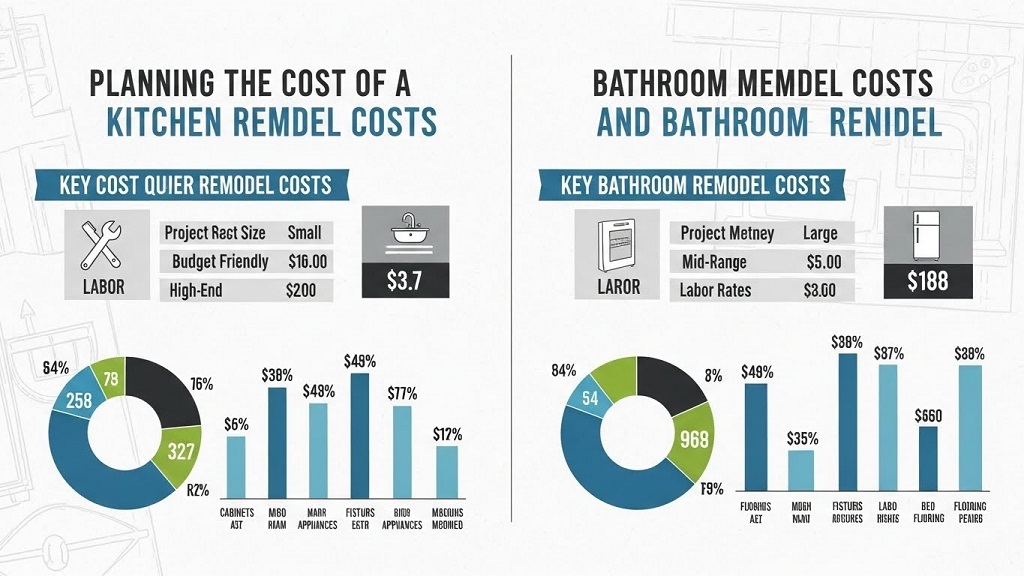
Understanding baseline pricing is your first step in budget planning. The average cost of a kitchen and bathroom remodel depends heavily on scope, materials, and location. A mid-range kitchen remodel typically costs between $55,000 and $100,000, while bathrooms range from $10,000 to $35,000. However, luxury renovations can easily exceed these figures by 50–100%.
National averages provide a starting point, but your specific cost of kitchen and bathroom remodel will depend on factors like:
- Square footage of the space
- Quality of materials and finishes
- Structural changes or additions
- Geographic location and local labor rates
- Existing condition of plumbing and electrical systems
The key to accurate estimation is breaking down your project into specific categories rather than relying on broad percentages.
How Do You Create a Detailed Kitchen Remodel Budget?
A successful budget planning strategy starts with itemization. Divide your kitchen remodel costs into distinct categories to gain visibility and control over spending.
Cabinetry and Storage: This often represents 30–40% of kitchen renovation costs. Stock cabinets run $5,000–$15,000, semi-custom options cost $15,000–$30,000, and fully custom cabinetry ranges from $30,000 and up. Don’t overlook cabinet hardware, which adds $500–$2,000.
Countertops and Surfaces: Material choice dramatically impacts your budget. Laminate countertops cost $1,000–$3,000, while quartz or granite tops run $3,500–$8,000 or higher. Backsplash tiles add another $1,000–$3,000 depending on materials and installation complexity.
Appliances: Budget $3,000–$8,000 for a complete appliance package including refrigerator, range, dishwasher, and microwave. High-end brands and custom finishes increase costs significantly.
Flooring: Kitchen flooring typically costs $2,000–$5,000 depending on material type. Tile, hardwood, and luxury vinyl each have different price points and durability characteristics.
Plumbing and Electrical: These systems often reveal hidden renovation costs. Budget $2,000–$5,000 for plumbing updates and $1,500–$4,000 for electrical work. Relocating fixtures increases costs substantially.
What Hidden Renovation Costs Should You Expect in Bathrooms?
Bathroom remodels frequently uncover surprise expenses that derail budgets. Understanding these common hidden renovation costs helps you prepare financially and avoid mid-project panic.
Water Damage and Structural Issues: Once contractors open walls, they often discover mold, rot, or water damage requiring remediation before proceeding. Budget 10% contingency specifically for potential water-related discoveries.
Plumbing Complications: Outdated pipes, lead solder, or incompatible systems may need replacement. Moving plumbing fixtures costs $1,000–$3,000 per fixture depending on complexity and distance.
Ventilation and Moisture Control: Building codes may require upgraded exhaust systems. Proper ventilation installation costs $500–$1,500 but prevents costly future moisture problems.
Tile Work and Waterproofing: Proper waterproofing behind tile adds $1,000–$2,000 but prevents catastrophic water damage later. Cutting custom tile work also increases labor costs significantly.
Accessibility Requirements: Bathroom updates sometimes trigger accessibility code requirements, adding grab bars, wider doorways, and accessible fixtures—costs vary widely but should be anticipated.
How Can You Avoid Budget Surprises During Renovation Planning?
Smart budget planning includes strategies to minimize unexpected costs and maintain financial control throughout your project.
Get Multiple Detailed Estimates: Request itemized bids from at least three contractors. Compare not just total price but line-item costs for labor, materials, and timeline. Detailed estimates reveal where contractors expect complications.
Conduct a Pre-Renovation Inspection: Hire a professional inspector before your remodel begins. Identifying issues like outdated wiring, plumbing problems, or structural concerns prevents discoveries mid-project. This costs $300–$500 but saves thousands in surprise expenses.
Include a Contingency Buffer: Plan for 15–20% contingency on top of your total estimated cost of kitchen and bathroom remodel. This dedicated fund covers hidden renovation costs without derailing your project.
Define Your Scope Clearly: Create a detailed scope of work document that specifies exactly what’s included and excluded. Vague scopes lead to misunderstandings and change orders that inflate costs.
Select Materials Early: Delays in material selection cause labor delays and cost overruns. Choose finishes, colors, and fixtures during planning, not during construction.
What’s the Best Budget Planning Approach for Large-Scale Remodels?
For ambitious projects combining significant kitchen and bathroom work, a phased approach to budget planning often works best. Consider prioritizing higher-impact areas that provide best return on investment and satisfaction.
Prioritize critical systems first: structural repairs, plumbing, and electrical work that affects functionality. These represent necessary investments that add value and prevent future problems. Next, tackle visible elements like cabinetry, countertops, and fixtures that influence daily satisfaction and resale appeal.
Separate your budget into must-haves and nice-to-haves. Must-haves ensure functionality and prevent problems, while nice-to-haves enhance aesthetics and experience. This clarity helps when cost of kitchen and bathroom remodel exceeds initial estimates and you need to prioritize.
How Do You Track Expenses Throughout Your Remodel?
Effective budget monitoring prevents costs from spiraling. Create a spreadsheet tracking estimated versus actual costs for each budget category. Update it weekly during construction and communicate with your contractor about any variations.
Request invoices for all materials and labor. Review change orders carefully before approving—this is where hidden renovation costs often hide. A seemingly small $500 change here and another $800 there quickly becomes $5,000 in overruns.
Conclusion
Planning the cost of a kitchen and bathroom remodel without surprises requires knowledge, preparation, and disciplined budget planning. By understanding average costs, creating detailed itemized budgets, anticipating hidden renovation costs, and implementing smart management strategies, you can maintain financial control throughout your project. Remember that your contingency fund isn’t wasted money—it’s protection against the realities of renovation work. Start your planning process today with detailed estimates and professional inspections. The time you invest in thorough budget planning directly translates to fewer surprises and greater satisfaction with your finished spaces. Ready to start your remodel? Consult with experienced contractors in your area and create your itemized budget this week—your stress-free renovation begins with preparation.
Frequently Asked Questions About Kitchen and Bathroom Remodel Costs
1. What percentage of my home’s value should I spend on a kitchen and bathroom remodel?
Financial experts recommend spending 5–10% of your home’s value on kitchen and bathroom improvements combined. For a $400,000 home, this translates to $20,000–$40,000. This range provides good value enhancement without over-investing relative to your property value.
2. What causes the biggest hidden renovation costs in bathroom remodels?
Water damage discovery is the leading cause of budget overruns. When contractors remove fixtures and walls, hidden mold, rot, or damaged framing often emerges, requiring immediate remediation before continuing. Building 10% contingency specifically for water-related issues prevents this from derailing your budget.
3. Can I reduce my kitchen and bathroom remodel cost without sacrificing quality?
Yes. Strategic choices include selecting semi-custom instead of fully custom cabinetry, choosing durable mid-range materials over luxury options, and limiting layout changes that require extensive plumbing and electrical work. Focus your premium spending on items you’ll use daily and see constantly.
4. How accurate are contractor estimates for cost of kitchen and bathroom remodel?
Detailed, itemized estimates from reputable contractors are typically accurate within 5–10%. However, hidden issues that emerge during construction can change estimates significantly. This is why pre-renovation inspections and contingency planning matter.
5. Should I budget separately for kitchen and bathroom remodel costs?
Yes. While both involve similar system upgrades, they have different average costs and hidden renovation costs. Separate budgets help you understand where money goes and make informed decisions about prioritization if overall expenses exceed your target.
6. What’s the best way to plan my budget if I’m remodeling both spaces simultaneously?
Combined projects allow contractor efficiency but require careful coordination. Create separate line-item budgets for each space, then add 20% contingency. Simultaneous work may reduce labor overhead but increases on-site complexity—discuss phasing options with your contractor.
7. How do I protect myself from unexpected cost of kitchen and bathroom remodel increases?
Get a fixed-price contract with clear scope documentation, require written approval for any change orders, maintain 15–20% contingency funds, and conduct a pre-renovation professional inspection. Regular budget reviews and transparent communication with your contractor prevent surprises from becoming disasters.
Related Topics: Home Insulation 101: Understanding Open Cell Spray Foam
Related Topics: Budget vs. Luxury: Home Renovation Ideas That Work for Any Wallet