







The gentle bubbling of an aquarium can be soothing during the day. However, when you’re trying to sleep at night, that same sound becomes a source of frustration. Many aquarium owners struggle with noisy pumps that disrupt their rest and create tension in the household.
The good news is that you don’t have to choose between maintaining a healthy tank and getting a good night’s sleep. There are numerous strategies you can use to quiet your aquarium pump without compromising the well-being of your fish. This comprehensive guide will walk you through practical solutions that address the root causes of pump noise.
Understanding why your pump makes noise is the first step toward fixing the problem. Once you identify the specific source, you can apply targeted solutions that make a real difference. Let’s explore the various methods that will help you create a peaceful environment for both you and your aquatic pets.
Understanding What Makes Your Pump Noisy
Before attempting any fixes, you need to identify what’s causing the noise. Aquarium pumps create sound through several mechanisms, and each requires a different approach.
Vibration is one of the most common culprits. When your pump runs, it generates vibrations that transfer to nearby surfaces. These vibrations amplify through the aquarium stand, cabinet, or wall, creating a humming or buzzing sound that travels throughout the room.
Air pumps make noise through their internal mechanisms as well. The diaphragm inside moves rapidly to create air pressure, and this movement produces sound. Lower quality pumps often have louder motors and less effective sound dampening inside their housings.
Water movement also contributes to the overall noise level. Bubbles breaking at the water’s surface, water splashing, and the sound of water flowing through filters all add to the acoustic environment. Sometimes what sounds like a noisy pump is actually the result of how water moves through your system.
Loose parts or improper installation can amplify existing sounds. A pump that isn’t secured properly will rattle and shake, creating far more noise than necessary. Similarly, airline tubing that touches the cabinet or bounces against the wall generates additional sound.
Choosing a Silent Fish Tank Pump
If your current pump is excessively loud and other solutions haven’t worked, investing in a quieter model might be your best option. Modern silent fish tank pump designs incorporate features specifically engineered to minimize noise.
Look for pumps with rubber feet or built-in dampening materials. These features absorb vibrations before they transfer to other surfaces. Multi-level dampening systems work even better by isolating the motor at multiple points.
The size of your pump matters more than you might think. Many people buy pumps that are too powerful for their tanks, thinking more is better. However, an oversized pump works harder than necessary and creates more noise. Match your pump to your tank’s actual requirements for optimal performance and quieter operation.
Magnetic drive pumps tend to run more quietly than traditional models. They have fewer moving parts and operate more smoothly. While they often cost more initially, the investment pays off in reduced noise and longer lifespan.
Read reviews specifically mentioning noise levels before purchasing. Other aquarium owners provide valuable insights about real-world performance that product descriptions might not reveal. Pay attention to reviewers who mention bedroom tanks or noise sensitivity.
Using a Vibration Control Pad Effectively
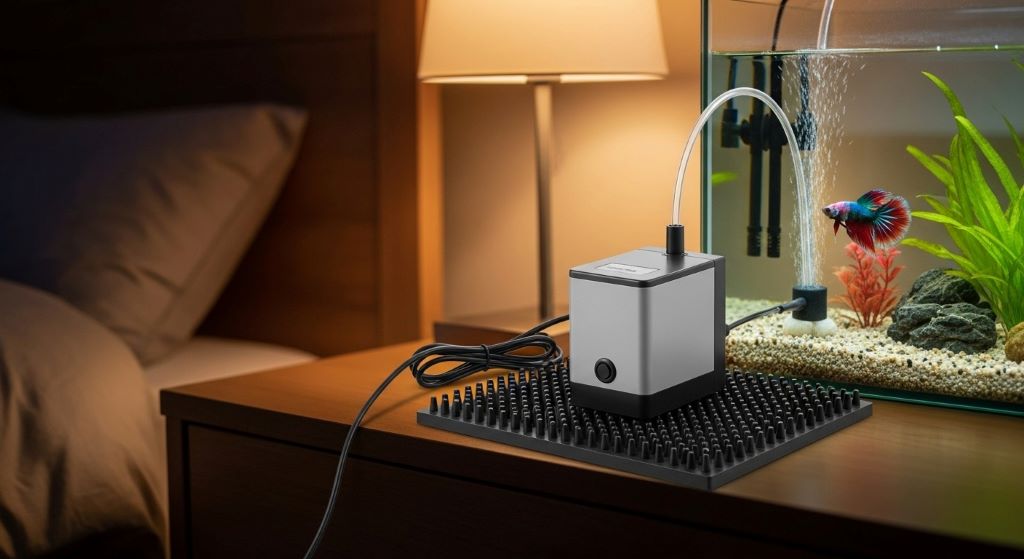
One of the simplest yet most effective noise reduction tips involves placing a vibration control pad under your pump. This inexpensive solution can dramatically reduce the sound transmission from your equipment to surrounding surfaces.
These pads work by absorbing vibrations before they reach the hard surfaces that amplify them. Made from materials like rubber, foam, or cork, they create a barrier that interrupts the sound transfer pathway. The result is a noticeable reduction in the humming or buzzing that keeps you awake.
Place the pad directly beneath your pump on a flat, stable surface. Make sure the entire base of the pump rests on the pad without hanging over the edges. If your pump is inside a cabinet, put the pad on the cabinet floor before positioning the pump.
For particularly noisy setups, consider using multiple pads. Stack two pads for extra dampening, or place pads under both the pump and the aquarium stand. Experiment with different materials to find what works best for your specific situation.
Additionally, you can cut pads to custom sizes for awkward spaces. Many vibration dampening materials come in sheets that you can trim with scissors. This flexibility allows you to address noise issues in tight quarters where pre-cut pads won’t fit.
Relocating Your Pump for Better Acoustics
Sometimes the simplest solution involves moving your pump to a location where noise matters less. The position of your equipment significantly affects how sound travels through your living space.
Placing your pump inside a cabinet or stand provides a natural sound barrier. The walls of the furniture absorb and deflect noise, preventing it from reaching your ears. However, ensure adequate ventilation to prevent overheating when enclosing equipment.
Moving the pump further from your sleeping area makes an obvious difference. If possible, position the tank in a different room or on the opposite side of a large bedroom. Even a few extra feet of distance can reduce perceived noise levels.
Consider hanging your pump on the back of the tank rather than placing it on a surface. This eliminates surface vibration transfer entirely. Use suction cups or mounting brackets designed for this purpose to ensure secure attachment.
Avoid placing pumps in corners or against walls whenever possible. These locations create acoustic amplification as sound waves bounce and reinforce each other. Leaving space around your equipment allows sound to dissipate more naturally.
Modifying Your Pump Installation
How you install and maintain your pump affects its noise output significantly. Small adjustments to your setup can yield surprisingly large improvements in sound levels.
Ensure all connections are tight and secure. Loose fittings vibrate and rattle, creating unnecessary noise. Check airline connections, power cords, and mounting hardware regularly. Tighten anything that has worked loose over time.
Use flexible tubing to prevent vibration transfer. Rigid tubing acts like a sound conductor, carrying vibrations from the pump to the tank and cabinet. Flexible silicone tubing absorbs some of this vibration before it travels.
Create slack in your airline tubing rather than stretching it tight. Taut tubing transmits vibrations more efficiently than relaxed tubing. Allow gentle curves and loops that can flex and absorb movement.
Wrap the pump in sound-dampening material if it’s particularly loud. Neoprene, foam, or even old towels can muffle motor noise. Be careful not to block ventilation openings that prevent overheating.

Addressing Water Flow Noise
Sometimes the pump itself runs quietly, but the water movement it creates generates disturbing sounds. Fortunately, you can modify how water flows through your system to reduce these noises.
Lower the water level slightly to reduce splashing from return nozzles. When water falls from a height, it creates more noise upon impact. Keeping the water level just below the return outlet minimizes this effect.
Adjust the direction of water flow from filters and powerheads. Water hitting the glass directly creates more sound than water directed along the glass or toward plants and decorations. Experiment with angles to find the quietest configuration.
Use a spray bar to diffuse return water flow. Instead of a single strong stream, a spray bar distributes water through multiple small holes. This creates gentler flow and less noise while still providing adequate circulation.
Add floating plants to dampen surface agitation. Plants like duckweed or water lettuce absorb the energy of bubbles breaking at the surface, reducing the popping and splashing sounds that contribute to overall noise.
Reducing Air Pump Specific Noise
Air pumps present unique challenges because they rely on rapid diaphragm movement to function. However, several techniques can quiet even the noisiest air pump.
Place your air pump above the water line to prevent backflow issues. When pumps sit below the tank, they work harder and make more noise. Elevation also prevents water from siphoning back into the pump during power outages.
Install a check valve in the airline to prevent water backflow. This small device ensures smooth air flow and reduces stress on the pump motor. Less stress means quieter operation and longer equipment life.
Clean or replace air stones regularly. Clogged air stones force pumps to work harder, increasing noise levels. When you notice reduced bubble production or louder operation, it’s time for maintenance.
Adjust the air flow rate to match your needs. Many pumps include flow control valves that let you reduce output. Running your pump at lower settings decreases noise while still providing adequate aeration for most tanks.
Consider using multiple small air pumps instead of one large unit. Smaller pumps often run more quietly, and distributing the load across several devices can reduce overall noise. This approach also provides redundancy if one pump fails.
Soundproofing Your Tank Area
Beyond addressing the pump itself, you can modify the environment around your aquarium to contain and absorb sound more effectively.
Add a rug or carpet beneath the aquarium stand. Soft flooring materials absorb vibrations and prevent them from traveling through floor joists to other rooms. This proves especially important for tanks on upper floors.
Hang sound-absorbing panels on nearby walls. Acoustic foam or fabric panels designed for studios capture sound waves before they bounce around the room. While this might seem extreme, it works remarkably well for serious noise issues.
Place your tank on a solid, heavy stand rather than a lightweight one. Sturdy furniture resonates less and dampens vibrations more effectively. Avoid hollow stands that act like echo chambers.
Use weatherstripping around cabinet doors if your pump lives inside furniture. This creates a tighter seal that prevents sound from escaping. The same foam strips used for windows and doors work perfectly for this application.
Position soft furnishings near the tank to absorb sound. Curtains, upholstered furniture, and bookshelves all help capture and disperse sound waves. A strategically placed bookshelf between the tank and your bed can make a noticeable difference.
Maintaining Your Equipment for Quieter Operation
Regular maintenance keeps your pump running smoothly and quietly. Neglected equipment becomes progressively noisier over time as wear and tear take their toll.
Clean your pump according to the manufacturer’s recommendations. Salt buildup, algae, and debris increase friction and noise. Most pumps benefit from monthly cleaning, though heavily stocked tanks might require more frequent attention.
Lubricate moving parts if your pump design allows it. Some models have serviceable parts that benefit from periodic lubrication. Check your manual for specific guidance, as not all pumps should be lubricated.
Replace worn components before they fail completely. Impellers, diaphragms, and rubber gaskets degrade over time. Changing these parts proactively prevents the loud grinding or clicking sounds that come from damaged equipment.
Inspect electrical connections for buzzing or humming. Loose plugs or faulty outlets can cause electronic noise distinct from mechanical pump sounds. Ensure all connections are secure and consider replacing old power strips.
Implementing Multiple Strategies Together
The most effective noise reduction tip involves combining several approaches rather than relying on a single solution. Layering different strategies addresses multiple noise sources simultaneously.
Start with the easiest fixes first. Install a vibration control pad, adjust the water level, and tighten loose connections. These simple steps often provide significant improvement without spending much money or time.
Then move to equipment modifications. Relocate the pump if possible, add sound-dampening materials, and adjust flow rates. Assess the results after each change to identify which modifications make the biggest difference.
Finally, consider environmental changes if noise persists. Add soft furnishings, install acoustic panels, or invest in a quieter pump if your budget allows. These larger interventions solve problems that simple fixes can’t address.
Keep notes about what you try and what works. This information helps you troubleshoot future noise issues and assists other aquarium owners who face similar challenges. You might discover a unique combination that works perfectly for your specific setup.
Understanding When to Seek Professional Help
Sometimes, despite your best efforts, pump noise continues to disrupt your sleep. Knowing when to consult experts can save you time and frustration.
If your pump makes sudden loud noises or grinding sounds, it might be failing. Don’t try to fix damaged equipment yourself if you lack experience. Replace it before it fails completely and potentially harms your fish.
Consult an aquarium specialist if you can’t identify the noise source. Experienced professionals can quickly diagnose problems that confuse beginners. Many shops offer free consultations and appreciate the opportunity to build customer relationships.
Consider hiring an acoustician for extreme cases. If you’ve tried everything and noise remains problematic, a sound expert can identify issues you’ve missed. This investment makes sense for expensive or complex aquarium setups.
Join online aquarium communities for advice and support. Fellow hobbyists often share creative solutions you won’t find in product manuals. These communities provide valuable troubleshooting assistance and moral support.
Balancing Fish Health With Noise Reduction
While reducing noise is important, never compromise your fish’s health in pursuit of silence. Your aquatic pets depend on you to maintain proper water conditions.
Ensure adequate oxygenation regardless of noise levels. If quieting your air pump reduces oxygen too much, you need a different solution. Fish health always takes priority over human comfort.
Maintain proper filtration even if filters create some noise. Clean water is essential for fish survival. Work on dampening filter noise rather than reducing flow rates below recommended levels.
Monitor your fish behavior after making changes. If they seem stressed, gasp at the surface, or become less active, your modifications might have disrupted water quality. Adjust your approach to protect their well-being.
Test water parameters regularly when changing equipment or configurations. New pumps or altered flow patterns can affect biological filtration. Stay vigilant during transition periods to catch problems early.
Conclusion
Reducing noise from your aquarium pump at night requires a systematic approach that addresses multiple factors. Understanding the sources of noise helps you choose the most effective solutions for your specific situation.
Investing in a silent fish tank pump provides long-term benefits if your current equipment is excessively loud. However, many noise issues can be resolved through simpler interventions like using a vibration control pad, relocating equipment, or adjusting water flow.
Remember that successful noise reduction tips often involve combining several strategies rather than relying on a single fix. Start with simple, inexpensive solutions and progress to more involved modifications only if necessary. Regular maintenance keeps your equipment running quietly and prevents noise from increasing over time.
By implementing these techniques thoughtfully, you can create a peaceful sleeping environment while maintaining a healthy habitat for your fish. The effort you invest in quieting your aquarium pays dividends in better rest and greater enjoyment of your aquatic hobby.
Frequently Asked Questions
Why does my aquarium pump get louder over time?
Pumps become noisier as they age due to wear on internal components, buildup of debris, and degradation of sound-dampening materials. Regular cleaning and replacing worn parts like impellers or diaphragms can restore quieter operation. If cleaning doesn’t help and your pump is several years old, replacement might be more cost-effective than continued repairs.
Can I turn off my aquarium pump at night?
This depends on your tank’s specific needs. Tanks with heavy fish loads or limited surface agitation should keep pumps running continuously to maintain oxygen levels. However, lightly stocked tanks with good surface movement might tolerate pump shutdowns during sleeping hours. Monitor your fish closely if you try this approach and watch for gasping or stress.
Will a larger tank be quieter than a smaller one?
Tank size itself doesn’t determine noise levels. However, larger tanks often allow more flexibility in equipment placement and can better mask pump sounds with greater water volume. The equipment you choose and how you install it matters more than tank size for controlling noise.
How much should I expect to spend on noise reduction?
Basic solutions like vibration pads cost just a few dollars, while premium silent pumps range from thirty to over one hundred dollars. Most people achieve satisfactory results spending between ten and fifty dollars on dampening materials and minor equipment upgrades. Expensive solutions are rarely necessary unless you have unusual circumstances.
Is it normal for new pumps to be noisy at first?
Some new pumps need a break-in period of a few days to a week before they run smoothly and quietly. Initial noise often comes from air trapped in the system or components settling into place. However, if noise persists beyond two weeks or seems excessive from the start, you might have a defective unit worth returning.
Related Topics:
10 Benefits of Open-Cell Spray Foam You Didn’t Know About
Crafting Curves: A Guide to Building Curved Structures for Models